
Long hours at a desk, long commutes, and less movement throughout the day can gradually change the way the hips and lower back feel. At first, the stiffness may seem minor. Getting out of the car feels tighter than it used to. Standing up after sitting takes an extra few seconds before movement feels comfortable again.
Over time, however, those same aches and movement changes may start happening more often. Sitting through meetings leaves the lower back feeling sore, while long drives may cause the hips to stiffen up. After sitting for too long, the body often feels less flexible than it once did.
For some adults, muscle tension is only part of the issue. Long periods of sitting can make arthritis-related stiffness in the hips or spine feel more noticeable, especially when joints are already irritated or losing flexibility over time.
Because these changes usually happen gradually, many adults adapt without fully realizing how much their movement patterns have changed. They shift positions more often, avoid certain movements, or feel slower getting moving again after sitting.
What This Article Covers
- Why arthritis stiffness often feels worse after sitting
- How prolonged sitting affects the hips and lower back over time
- The difference between muscle tightness and arthritis-related stiffness
- Why morning stiffness and sitting stiffness can feel similar
- Signs arthritis-related joint changes may be contributing to discomfort
- How physical therapy may help improve mobility and reduce joint strain
Why Sitting Can Make Arthritis Stiffness Feel More Noticeable
The hips and lower back are designed to keep moving throughout the day. Remaining in one position for extended periods can leave the joints and surrounding muscles feeling stiff and less mobile.
That stiffness usually becomes most noticeable during transitions. Standing up after sitting can feel stiff before the body starts loosening up again.
Some adults notice it after driving home from work. Others feel it after sitting through a movie or spending the day moving between a desk, meetings, and the couch at night.
For adults with arthritis-related joint changes, too much inactivity can make stiffness feel more noticeable through the hips and lower back.
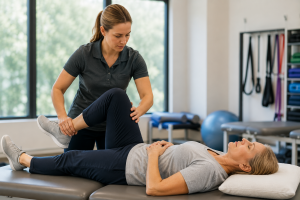
How Prolonged Sitting Affects the Hips and Lower Back Over Time
Movement helps the hips, pelvis, and spine work together more comfortably. When sitting becomes part of the routine for hours at a time, these movement changes usually happen gradually.
The hip muscles may tighten while supportive muscles through the core and glutes become less active. As posture gradually shifts forward, extra pressure can build through the lower back and surrounding joints without feeling obvious right away.
Signs Movement Patterns May be Starting to Change
- Climbing stairs feels tighter through the hips
- Walking longer distances feels more uncomfortable
- Standing upright after sitting takes longer
- Stiffness lingers after inactivity
Over time, however, those same movement changes may start showing up more consistently. Some adults begin avoiding longer walks or shifting positions constantly while sitting because the hips and lower back no longer feel comfortable staying still for extended periods.
Arthritis Stiffness and Muscle Tightness Can Overlap
One reason hip and lower back discomfort can feel frustrating is because arthritis stiffness and muscle tightness often happen together.
When joints become irritated, surrounding muscles sometimes tighten in response. Moving less often tends to increase strain on nearby muscles and soft tissues, making the discomfort feel more widespread.
For some adults, the stiffness feels deep around the joint itself. Others describe pulling, tension, or aching that gradually improves once they start moving again.
Although symptoms vary from person to person, arthritis-related stiffness often behaves differently than muscle soreness alone.
| Muscle Tightness | Arthritis-Related Stiffness |
| Often improves quickly with stretching | Usually eases more gradually with movement |
| Common after activity or overuse | Often feels worse after inactivity |
| Feels muscular or pulling | Feels deeper around the joint |
| May fluctuate day to day | May become more consistent over time |
Some adults experience both types of stiffness at the same time, especially when movement patterns have already started changing because of discomfort.
Why Morning Stiffness and Sitting Stiffness Often Feel Similar
Many adults notice the body feels stiffest first thing in the morning and after sitting for long periods. In both situations, the joints and surrounding tissues have spent time relatively inactive, which can leave the hips and lower back feeling tighter until movement gradually becomes easier again.
For adults with arthritis-related joint changes, that process may take longer than it used to. Instead of improving after a few steps, the stiffness may linger through more of the morning or return again after another long stretch of sitting later in the day.
Situations Where Stiffness May Feel Worse
- Getting out of bed
- Standing after desk work
- Long car rides
- Extended travel days
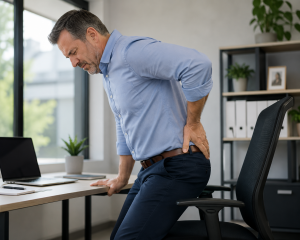
Signs Arthritis May Be Contributing to Hip or Lower Back Pain
Arthritis symptoms do not always begin with severe pain. In many cases, stiffness and reduced flexibility appear first.
Simple movements that once felt automatic can start requiring more effort throughout the day. Bending down, twisting, standing after sitting, or walking after inactivity may feel less smooth and comfortable than before.
Some Adults Begin Noticing
- Stiffness after sitting for longer periods
- Aching through the lower back at the end of the day
- Reduced flexibility through the hips
- Soreness during transitions from sitting to standing
As stiffness becomes more consistent, subtle changes in posture, walking patterns, or balance may also begin developing over time.
How Physical Therapy May Help Improve Mobility and Reduce Joint Strain
Physical therapy often focuses on improving movement patterns surrounding stiff or irritated joints.
For adults dealing with hip or lower back stiffness, treatment plans may include mobility work, flexibility exercises, strengthening programs, and posture-focused movement strategies designed to reduce stress on the joints during everyday activity.
Physical therapy may focus on improving
- Flexibility around stiff joints
- Strength in supportive muscle groups
- Posture and movement mechanics
- Mobility during everyday activities
Improving movement patterns often helps reduce stiffness throughout the day, especially when prolonged sitting has started contributing to stiffness and reduced mobility.
Why It May Help to Address Stiffness Earlier
Stiffness that comes and goes is easy to dismiss at first. However, when discomfort begins happening more consistently or starts affecting movement throughout the day, it may help to better understand whether arthritis-related joint irritation, reduced mobility, or movement limitations are contributing to the symptoms.
Many adults spend years adjusting around stiffness before realizing how much it has started affecting the way they move during normal daily routines.
Frequently Asked Questions
Can sitting too much make arthritis stiffness worse?
Long periods of sitting may increase stiffness in joints already affected by arthritis, especially through the hips and lower back.
Why does my lower back hurt after sitting?
Prolonged sitting may increase pressure on the lower spine while also tightening surrounding muscles and reducing flexibility.
Can arthritis feel worse after inactivity?
Yes. Many adults notice increased stiffness after sleeping, driving, sitting at work, or remaining in one position for long periods.
How do I know if stiffness is muscular or joint-related?
Muscle tightness often improves more quickly with stretching. Arthritis-related stiffness usually eases more gradually once movement increases again.
Can physical therapy help arthritis stiffness?
Physical therapy may help improve mobility, flexibility, posture, and movement patterns surrounding affected joints.
When Hip and Back Stiffness Starts Affecting Daily Life
Hip and lower back stiffness often becomes part of daily routines gradually, which is one reason many adults wait so long before discussing their symptoms. When discomfort after sitting, driving, or inactivity becomes more consistent, it may help to better understand whether arthritis-related joint changes or movement limitations are contributing to the stiffness.
To schedule an evaluation with Advanced Care Physical Therapy, call (716) 282-2888 or request an appointment online.
This blog is intended for educational purposes only and is not a substitute for professional medical advice, diagnosis, or treatment. Individual symptoms and treatment recommendations may vary.


